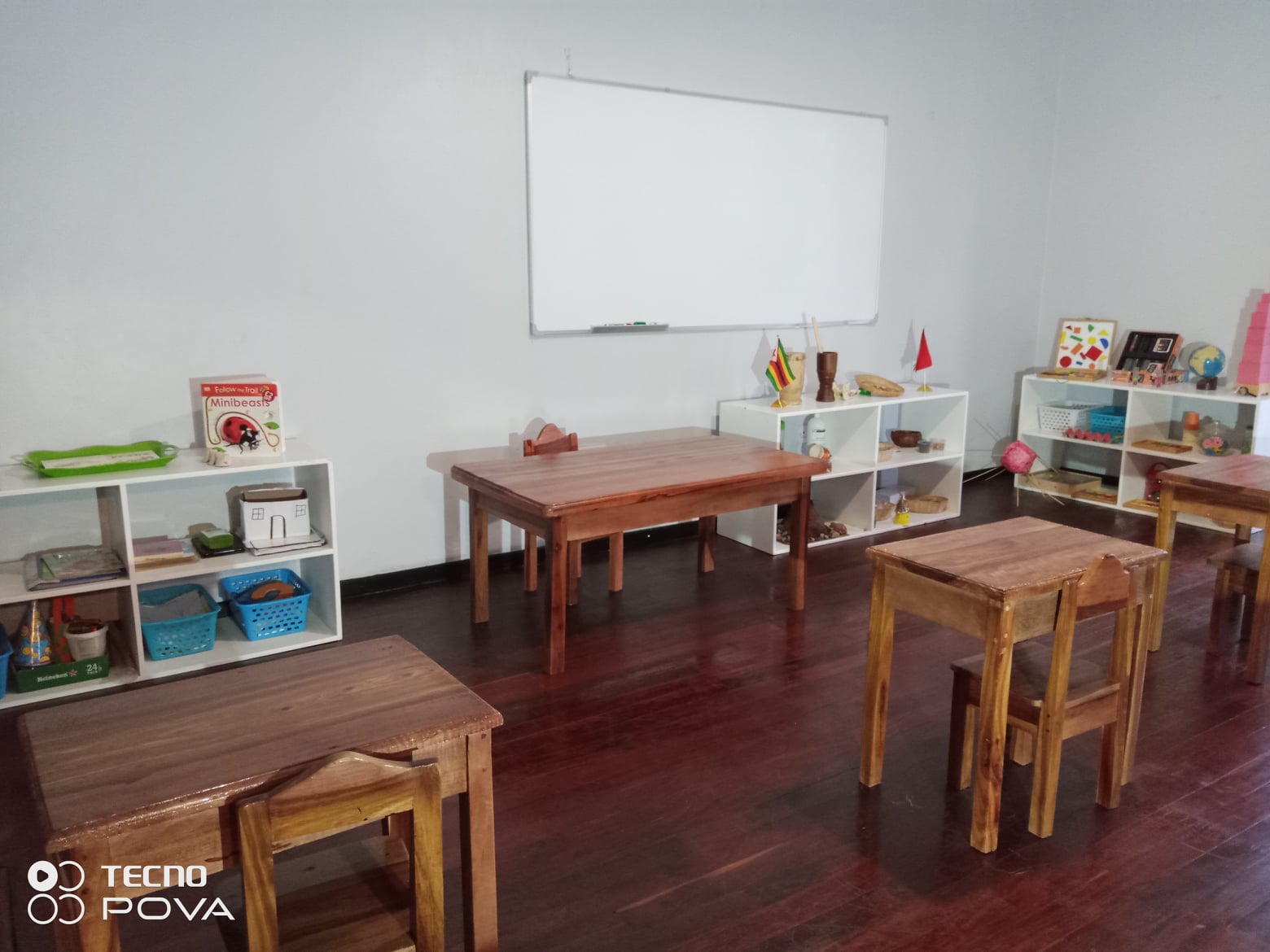
Three beautifully connected programmes from infancy through upper primary β each designed for exactly where your child is.
The Nido (Italian for nest) is designed for the youngest learners. It is warm, unhurried and built entirely around the infant's need for security, sensory exploration and the development of movement and language.
Each infant is assigned a dedicated Key Person who provides consistent, loving care and serves as a bridge between home and school. Our Nido environment is proportioned for tiny bodies β every object, surface and activity is chosen to invite safe, purposeful exploration.

1 teacher to every 6 infants under 2 years. Our safeguarding policy ensures no infant is ever unsupervised. All staff hold current police clearances.
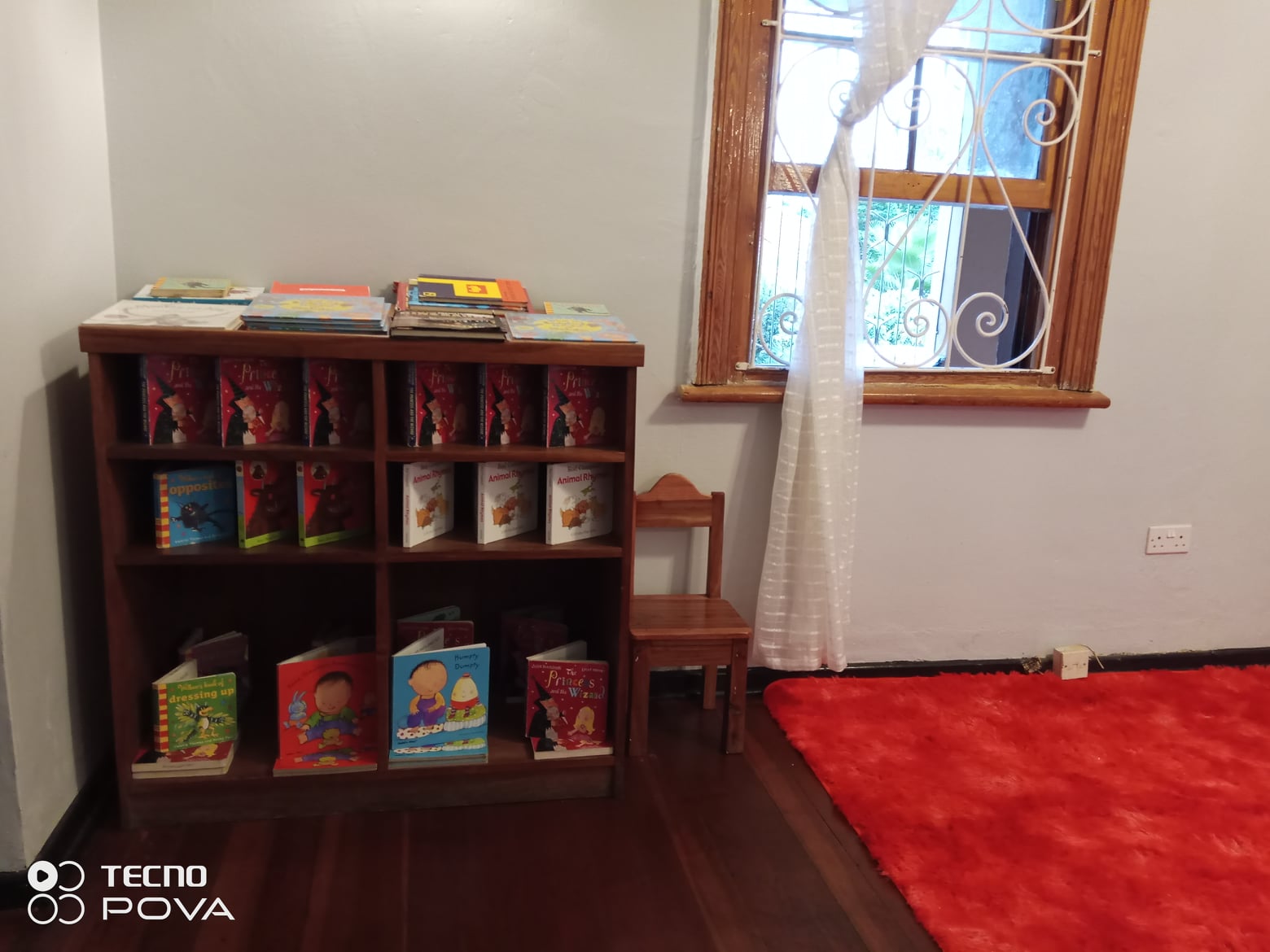
The Casa is the heart of Khaya Montessori β the room where the Montessori magic is most visible. It is a beautiful, ordered world in which children between 2Β½ and 6 are free to choose their work, move purposefully and pursue their natural drive to understand everything.
Children here typically begin sounding out words by age 3Β½, reading fluently by 5, and writing confidently by 5Β½. Mathematics moves from concrete beads and rods to abstract operations β building a deep, intuitive mathematical mind before numbers ever appear on paper.
| Area | What Children Learn |
|---|---|
| π§Ή Practical Life | Sweeping, pouring, dressing, food preparation, care of the environment |
| π¨ Sensorial | Colour, sound, texture, size, weight β all explored through touch |
| π Language | Phonetic reading and writing from age 3Β½; both cursive and manuscript |
| π’ Mathematics | From concrete beads and rods to abstract operations |
| π Culture | Science, Geography, History, Art, Music and Spiritual Development daily |

Mixed-age groups allow younger children to observe and aspire, while older children consolidate and lead β a natural social learning dynamic that Montessori identified a century ago.
The Junior School builds on the Casa foundation, offering a rigorous and broad primary curriculum through integrated, project-based Montessori learning. Children at this stage thrive on intellectual challenge, collaborative exploration and taking real responsibility.

A child's education happens everywhere β on the sports field, in the swimming pool, in the dance studio and in the garden.
Swimming
Ballet
Karate
Cricket
Music
Aerobics
Astronomy
Art & Crafts
Calligraphy
Chess & Board Games
Coding & Robotics
Gardening
| Time | Activity |
|---|---|
| 7:00β7:30 | Morning Welcome β supervised free play, music and multimedia rhymes |
| 7:30β8:00 | Nutritious morning porridge / cereals |
| 8:00β8:30 | Morning Assembly |
| 8:30β9:00 | Circle Time β weather, calendar, numbers, letters, songs, stories and prayer |
| 9:00β9:45 | Montessori Work Cycle β child-chosen activities from the prepared shelves |
| 9:45β10:30 | Clean-up, hand washing, mid-morning breakfast |
| 10:30β10:55 | Outdoor play / gym / physical education (minimum 30 minutes daily) |
| 11:00β12:15 | Learning Activities β music, art, karate, swimming, STEM |
| 12:30β1:00 | Lunch β communal, nutritious, farm-fresh meals prepared on site |
| 1:00β1:15 | Circle Time β half-day learners depart |
| 1:15β2:15 | Rest Time β floor mats or quiet activity |
| 2:15β3:30 | Afternoon Work Cycle / Junior School independent learning |
| 3:30β4:20 | Afternoon snack, stories, reflections, prayer and songs |
| 4:20β4:30 | Home Time β signed out by authorised person only |
Book a school visit to see our programmes in action and speak with our teachers.